A Gini coefficient of zero expresses perfect equality, where all values are the same (for example, where everyone has the same income). A Gini coefficient of one (or 100%) expresses maximal inequality among values (e.g., for a large number of people where only one person has all the income or consumption and all others have none, the Gini coefficient will be nearly one).
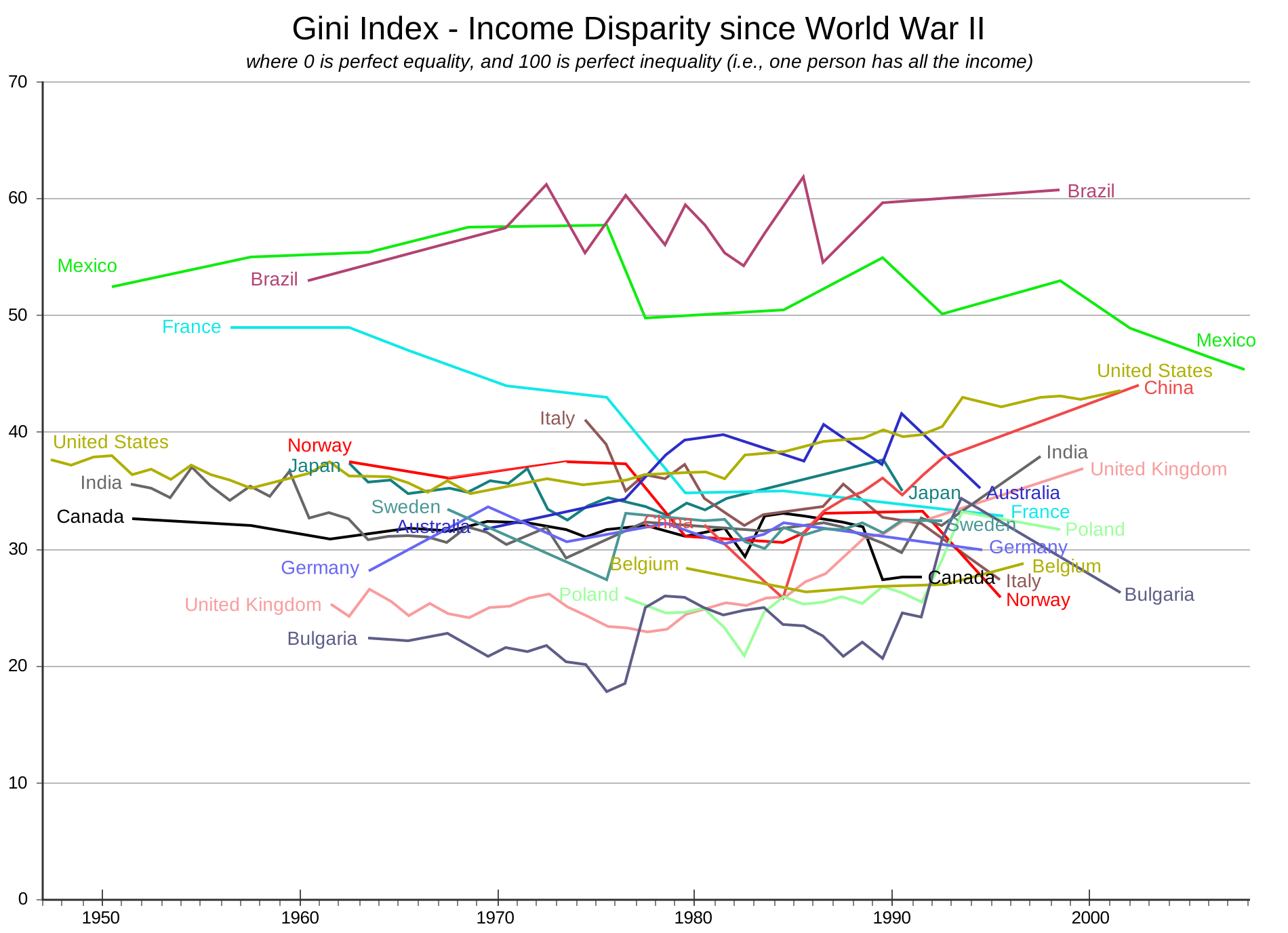
People's income inequality (or) wealth inequality has reduced a lot in the countries like Canada, Norway, Italy, and France. And most people have equal wealth.
While in the countries like USA, China, Brazil, UK, the richer got richer and the poor got poorer. The gap has risen.
In countries like Norway, the rich people are taxed higher and the wealth is transferred to the poor people through various welfare schemes. While rich people in the USA use various tax avoidance (if not tax evasion) methods to pay negligible amounts of tax.
Smaller countries with less immigration from poorer countries may also contribute to less income equality. Also, it is not possible to have the exact same wealth/income for all the population of a country.
Hard for me to really say. When I got out of the Army, I worked my way up the automotive repair line until I could buy my own shop. That's what I have trouble with these figures. A good hard working person can and will be successful while many just don't have the ambition.
Imagine, "hard working" and "ambition" in the same thought. We have a President who rewards sitting on yer arse at home....and he'll send you a check for doing so. It certainly "cancels" the idea of working for your bread doesn't it. I cannot wait for the mid-terms. You're about to see what the American people think about socialism. I cannot wait.
Part of the reason for the skewing of wealth in the US is the control the multimillionaires and billionaires have over our corrupt politicians, who themselves (not coincidentally) become very wealthy in the course of their political careers.
Thus the super-wealthy and the politicians will never tax themselves sufficiently if they can help it, leaving it to the productive middle class to pay.